When Walks Get Scary: Bowie Moves to the City

IMG_20160709_115720.jpg

No one is ever fully prepared for when reactivity comes into their dog’s life; the surge of energy always surprises the owner just as much as the dog. Seasoned trainers and behavioral councelors are no different. Yet there are things you can do, preferably with the aid of a trainer or counselor experienced in phobias, desensitization, and a complete lack of force/punishment training.

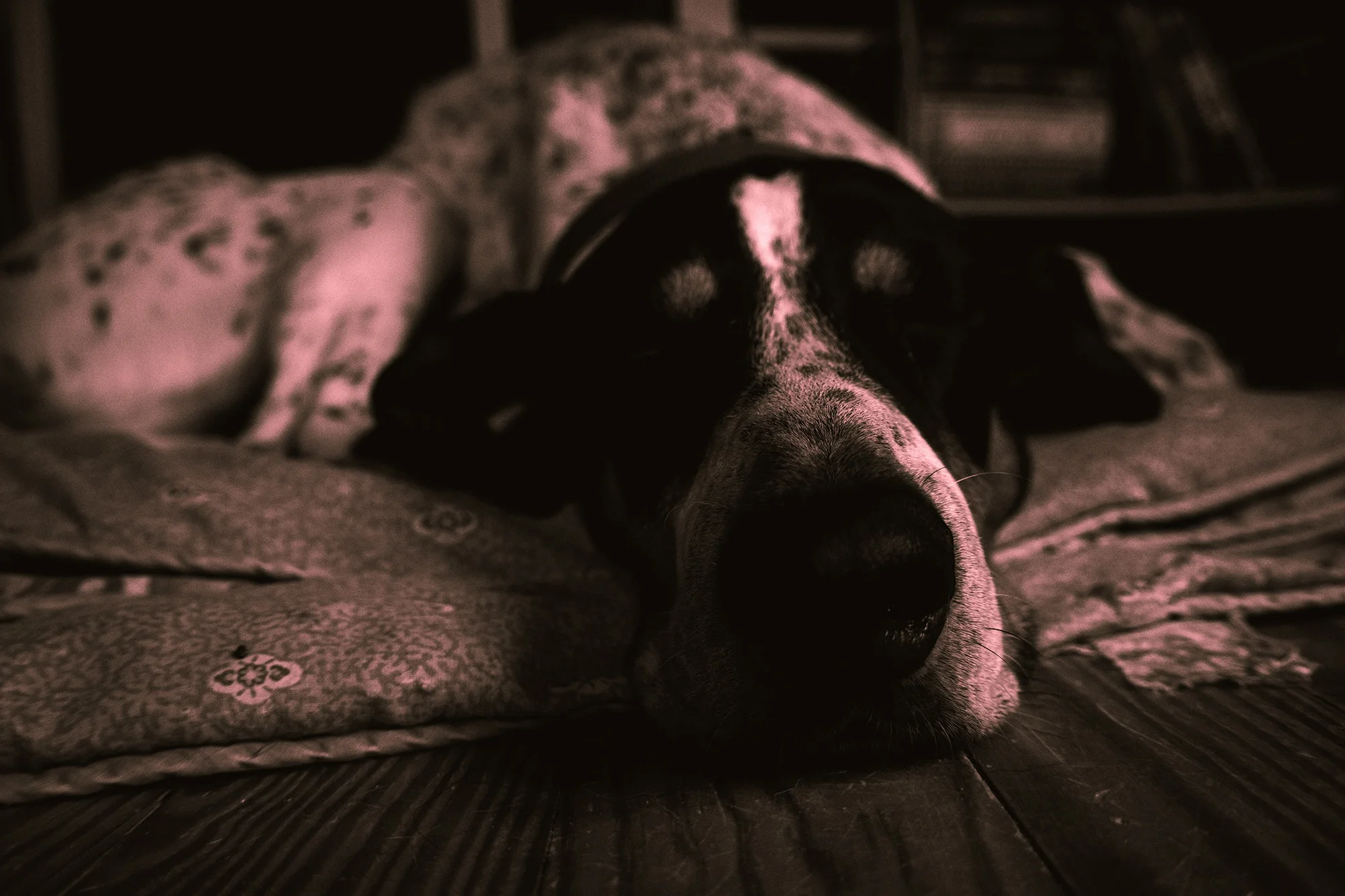
While Mudra seems to be in his element with living in Jersey City after a life in the countryside of Virginia, Bowie showed his houndyness on day two. Mudra is showing his own minor signs of understandable stress (we’ll go into that later), but Bowie has developed the tell-tale lunging for home behavior to the end of his walk, as well as wanting to bolt across the street, and generally being on the edge of his threshold during walk time. While inside definitely was a calmer place for him, we still had a telltale sign of his discomfort: Bowie refused to nap on the couch, which is prime realty to our houndie.

We’re on our second weekend now, and Bo’s ability to decrease his anxiety is right on schedule. Last night he climbed the couch and flopped bodily on Ian’s legs, and his tail has been wagging in the mornings before his walk.

Are the walks easier? Somewhat. So if his walks aren’t all better, how is he making progress?

Because reactivity can sometimes take a few weeks (or months), to work through depending on the animal. In the case of phobia in extreme cases, it can take longer.

Now in mornings Bowie heads out the front door and whines. He whines the whole walk. And we do not attempt to quiet him or shush him. We also don’t make concerned voices, anxious sounds, or anything too exciting in tone. Both Ian and I talk calmly in a relatively level fashion the entire walk.

Why?

Vocalization is the common step for most dogs that are finding their comfort zone, and if they’re not forming a nasty habit, they should be allowed to work through that necessary step of expression. Some dogs totally skip it (a qualified trainer or behavioral counselor knows how to identify this, and should be sought if your dog is showing repeated stress vocalizations). Due to Bowie’s genetics, disposition, and level of anxiety in adapting to the city, the behavior is expected.

He’s now past the tightly shut mouth and silent, wide eyed panting. His walking is typically much looser and relaxed, with what can seem like random bursts of anxiety or stress where he will whine louder, sit down quickly, or make a motion to weave about instead of walking mindfully. But are these behaviors actually random?

Not in the least.

It’s hard to inhibit stressful responses. Any animal that puts that much effort into trying to self soothe and keep their head on straight is going to have moments of panic. To try and force an animal to not feel any form of fear or stress is detrimental and typically causes more damaging behavior in the long run.

So how are we sure that this is helping our big brave Bowie out?

He’s happy to go for that walk. Tail wagging before we go, exhausted but calm when we return home (and right now his walk is only 4 blocks). At his checkpoints his body is loose despite whining, and he will lay down on his own in these places. When he does feel stressed, he typically stops moving at all or pulls off to the side, creating a natural break and an ability to think, instead of allowing his stress to overwhelm him. Allowing him to make better decisions.

He’s doing well, and he’ll continue to do even better as we progress if we maintain our patience and consistently stay within his threshold.

What a Month!

It's been a month since my last update, and during that time we've moved in, set up the house, and started to get the boys adjusted. As things finally fall into place here with Mantra Pet in Jersey City, updates will become far more frequent.

As of the 25th, I'll be attending orientation at Liberty Humane Society to begin donating volunteer hours to the shelter. My hope is to be able to lend them my services as much as I'm capable, with a minimum of 2-5 hours a week, if not more if the Sponsor a Pet idea gets off the ground! Only time will tell.

Beyond that, it's all kinds of paperwork time. I'll be meeting with my SCORE mentor on Weds to help me get this business rolling, our Google Maps listing has it's verification code in the mail (will take a week or so to get to me), and I'm researching LGBTQ owned small business grants and the like.

But enough about set up - our next post will get us back on track with talking reactivity and phobias!

Fear& Reactivity Series

When your pet is reactive (from avoidance to aggression), it can sometimes feel as if the world has flown out from under your feet. Depending on the severity or your sensitivity to it (or the sensitivity of others to it), your perception of a nice day outside can completely change. The way the of structuring your day becomes different. You stop enjoying walks with your pet or having people over because it becomes too stressful. Over time, you may even stop taking walks on your own. I’ve myself not only seen people who used to hike and jog become the type that over time only go out to work, run errands, and hang out in a way that doesn’t involve taking much of a stroll.


Once upon a time, I even was one of those people very, very briefly while I helped Dougal, my newly adopted and extremely reactive GSD/Hound/Akita/??? 8 year old adjust. And like most other animals, Dougal's only problem was extreme fear and no coping skills beyond reacting instinctively.


More often than not, we're told these are the pets (and I've known all kinds, from dogs to cats, parrots with serious bite risk issues, large mammals, bunnies, the list goes on) are unmanageable and can not be helped, while everyone around us tells us a myriad of ways that are supposed to "fix it". Often, those ways are antiquated or just plain well-meant nonsense passed down through media, family, or friends, and what's more: they can make the problem worse. Suddenly you no longer even have the support of the people who were giving you advice, who not only refuse to take responsibility for pitching bad ideas your way but tell you that you're still not doing it right.
By now, you might be even feeling enough resentment that you think your pet does this to spite you, not because they too are stressed in their own way.
So what’s a burnt out, compassionate animal lover to do?


Over the next few weeks, I’ll be posting articles and essays specifically about reactivity and fear, and how to help yourself and your pet. We’ll be talking about minimizing reactions to phobic or overstimulating triggers (people, other animals, kids, noises, cars, you name it), building confidence, and then slowly increasing the intensity of said trigger, and throwing in other distractions. While not an overnight cure, these short sessions (which should be attempted with the aid of a certified professional for best results and increased safety) will make a difference in your pet, and allow them and yourself to start enjoying the things you want to enjoy together.


Until our next update, however, do yourself a favor: Change the context.
Have walks become terrifying? Go for a stroll in your neighborhood without your pet and make it enjoyable. Get an ice cream, bring a coffee, sit somewhere and read a book or play with your phone. If you’re in a neighborhood you feel safer with some company, bring a friend. Say hi to your neighbors, strike up a conversation that “oh yes I know, Fluffy’s developed a problem, but we’re starting something to help them out”.
Friends can’t come over? Go to someone else’s house for some hang out time, or meet up somewhere with some pals and enjoy yourself. And then go home, set yourself up with something yummy and relaxing and read or watch a movie with your stressed pet.
Noises or sights at the apartment are scary? Set up a safe place for your pet, be it a crate (yes, even for a cat) or a room with it's own small den area and start pairing scary sounds or sights off with being given a high-value chew (like a kong – even for kitties!) and going to that safe space and hanging out together. Helpful tip: If your pet is reacting to reflections in a door or appliance, get some nice looking contact paper or window cling film (and it looks cool too).
So scared you can’t even get near? Get a professional trainer or behaviorist involved immediately, preferably one CPDT or IAABC certified (no force training!). In the meantime make your existence mean random wonderful things when you walk by at a distance (snacks, toys, etc) and otherwise engage them as little as possible (even if they come up to check you out). Let them greet you on their terms for a bit.